
Dr. Alana Sterkel (left) and Dr. Alexandra Linz (right)
Wisconsin researchers have developed an improved testing method that could dramatically speed up the process of diagnosing blastomycosis.
Blastomycosis is a potentially life-threatening fungal infection that causes flu-like symptoms. Infection primarily occurs when someone inhales airborne fungal spores from forest environments. Wisconsin’s damp soil, waterways, and popular outdoor activities, like hunting, create frequent opportunities for exposure.
Wisconsin leads the world in blastomycosis cases, with rates in the north ten times higher than in the southern part of the state. Fifty to one hundred cases are reported each year in Wisconsin, resulting in one to two deaths. Diagnosing blastomycosis remains a major challenge even though the disease is prevalent in Wisconsin.
Testing and treatment are often delayed, which can be deadly. “The number one cause of death for blastomycosis is delay in diagnosis and treatment,” says Dr. Alana Sterkel, an assistant professor in the Department of Pathology and Laboratory Medicine at UW–Madison. Sterkel is also the associate director of the Communicable Disease Division at the Wisconsin State Laboratory of Hygiene.
Diagnosing blastomycosis is difficult because its clinical symptoms overlap with those of other diseases, such as bacterial pneumonia. Patients can be misdiagnosed for months before a physician requests the appropriate test.
Even if a doctor suspects someone might have blastomycosis, they may not start treatment without a positive test because the antifungal medication can potentially cause harm to the kidneys.
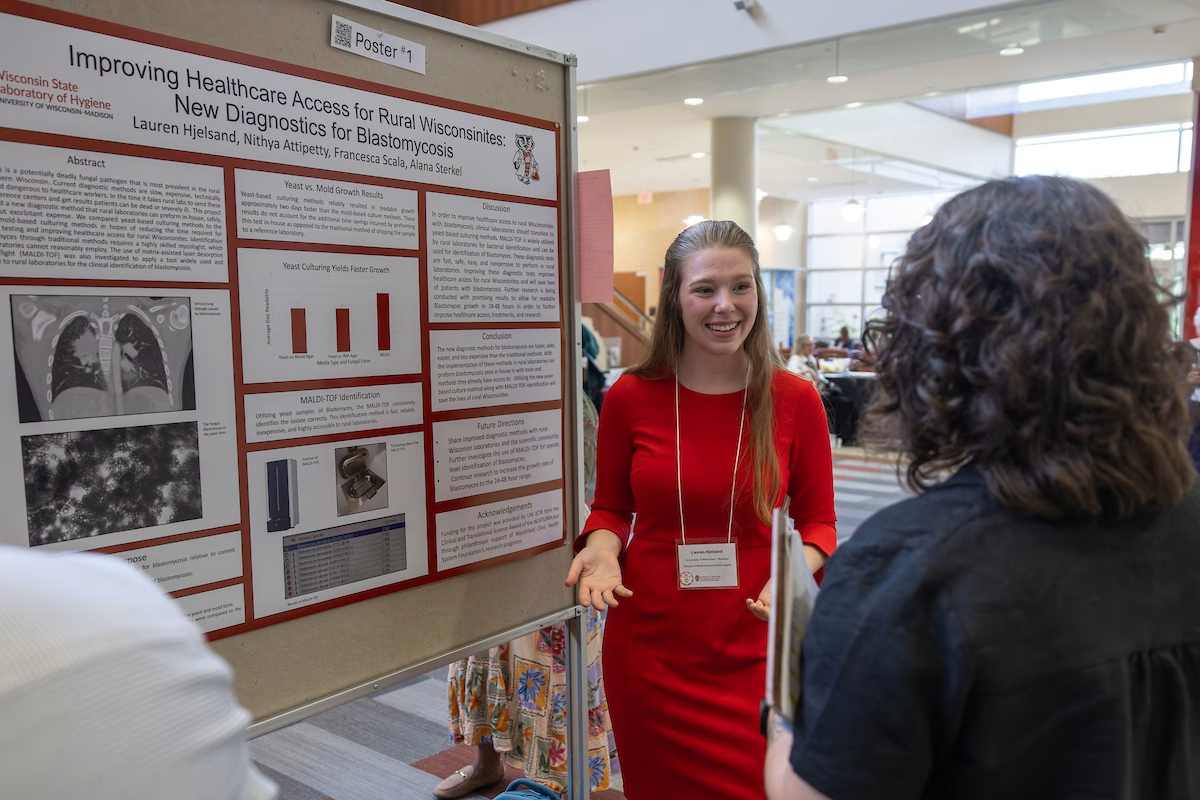
Dr. Sterkel and Dr. Alexandra Linz, a research scientist at the Marshfield Clinic Research Institute, identified the delay in diagnosing and treating blastomycosis as a critical rural health issue. With support from the Marshfield Clinic Research Institute & UW–Madison Collaborative Research Pilot Award from the Institute for Clinical and Translational Research, they developed a new test that cuts diagnostic time from weeks to days, offering the potential to transform care for patients across rural Wisconsin.

Comparison of the two diagnostic methods for identifying the Blastomyces fungus. Top image shows the mold-based culture, and the bottom image shows the yeast-based culture. Image credit: Cory Pike, senior research associate.
The traditional diagnostic method uses mold-based culturing, which involves collecting a sample and allowing the Blastomyces fungus to grow in a lab environment. This process is difficult to run, expensive, and requires specially trained staff. Most rural labs in Wisconsin lack this expertise and must send samples to specialized facilities.
Getting results using the traditional test can take two to four weeks. If a test must be repeated, it could take up to six weeks to get the necessary information to start treatment.
Based on current data, the new testing method only takes one to three days rather than weeks. Patients can receive their test results and start treatment much sooner—a positive since treatment can take six to 12 months.
The new testing method uses a yeast-based culture. This is inherently safer because yeast poses fewer health risks than mold. Working with yeast reduces the chance of inhaling fungal spores, and the risk of lab-acquired infections is much lower compared to handling the mold culture. The new method also relies on common lab tools and requires minimal staff training, removing obstacles that have long slowed rural adoption and ensuring faster diagnoses.
Despite the initial positive results, Sterkel and Linz still have a long road ahead to integrate the new testing method into clinical use. Sterkel plans to implement the new test at the Wisconsin State Laboratory of Hygiene, initially as a secondary confirmation tool to enhance surveillance. Once established, it could become the primary diagnostic method and expand into rural labs across the state. Sterkel hopes to tap into the Wisconsin Clinical Laboratory Network to help speed up adoption of the new testing method.

From left to right: Olivia Bree, Suzanne Dargle, and Nithya Attipetty—three researchers whose behind‑the‑scenes contributions were essential to this project.
To accelerate adoption in other states, Sterkel and Linz aim to share the method nationally through publications and the Clinical and Laboratory Standards Institute guidelines.
This project represents a true collaboration between researchers, both of whom are using their expertise to expedite diagnosis and improve clinical care and patient outcomes. Equally essential to this effort are Francesca Scala, the research lab manager who oversaw the project’s daily operations, administration, and safety, Lauren Hjelsand, an undergraduate research assistant whose hands-on support strengthened the team’s capacity to move the work forward, and Cory Pike, a senior research associate responsible for the performing the culture work at Marshfield Clinic Research Institute. Together, their work is driving an innovation that could redefine blastomycosis care nationwide, offering faster diagnoses and saving lives.
Funding for this project was provided by Marshfield Clinic Research Institute & UW–Madison.