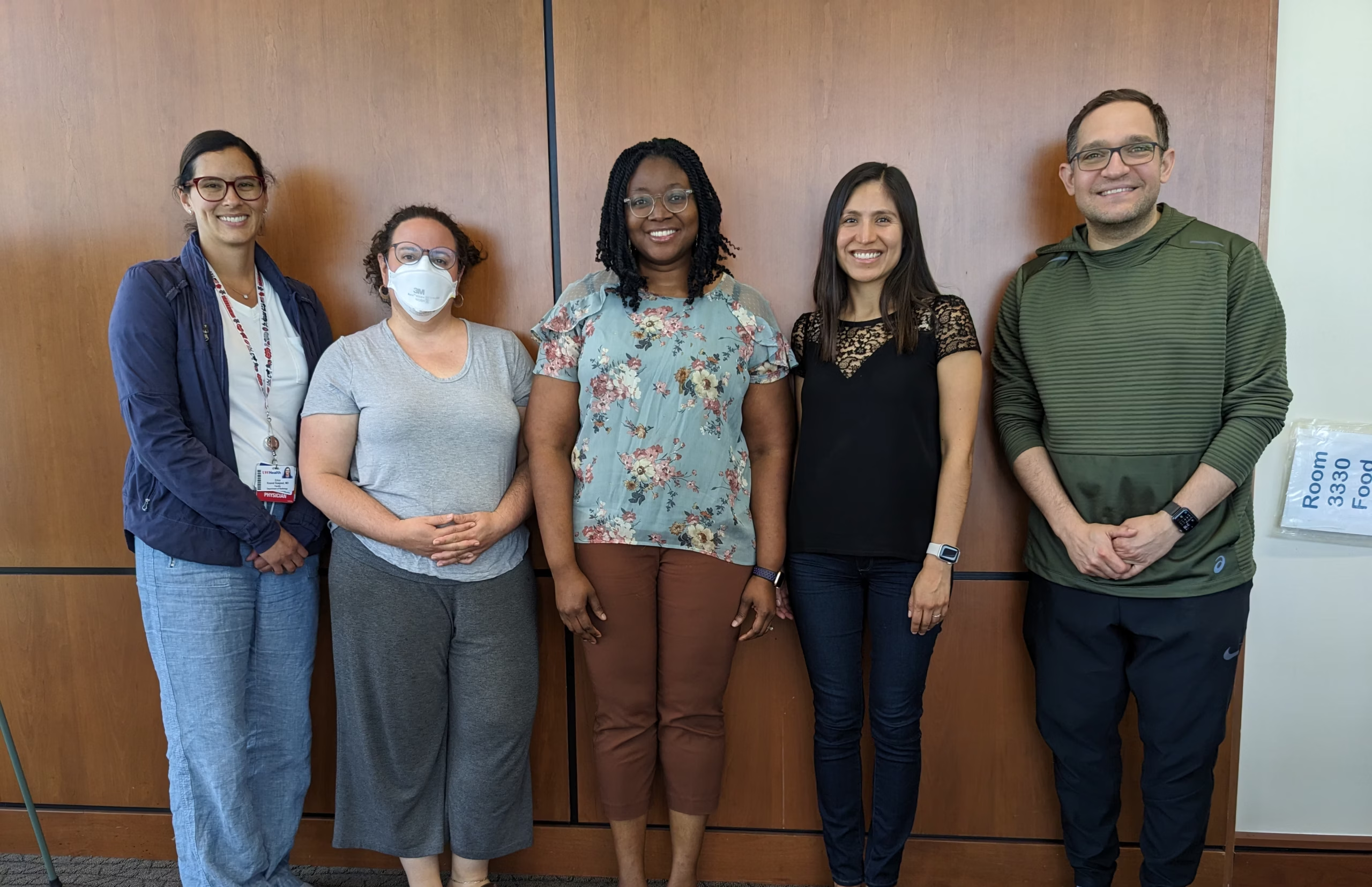
Ivan Rosado-Mendez, PhD, understood that building an academic career at UW–Madison would require mentorship, community, and a roadmap for success. That’s what led him to STRIDE, an initiative within the Pathway Program designed to support early-career faculty and help them push past the roadblocks that too often stall careers.
Led by faculty lead Vaishali Bakshi, and program manager, Amy Filut, STRIDE 1.0 provides intensive mentoring, career development, and peer support, while STRIDE 2.0 offers complementary coaching and professional development support for STRIDE 1.0 alumni. These features made STRIDE appealing to Rosado-Mendez, who saw the program as an opportunity to develop the skills and support network needed to grow as both a scholar and a mentor.
 An assistant professor in the Department of Medical Physics, with a joint appointment in the Department of Radiology, Rosado-Mendez researches ultrasound imaging. His work spans collaborations in obstetrics and gynecology, neurology, orthopedics, and sports medicine, developing new ways to use ultrasound to improve patient care. His goal is to make advanced medical imaging more widely available, affordable, and useful.
A common component of all the Pathway Programs is their focus on building community within cohorts. Through conversations with fellow scholars at similar career stages, Rosado-Mendez found a unique source of support that extended beyond professional development.
“My peers became mentors, too,” he said. “We talked about careers, but we also talked about family, frustration, and how we navigate different challenges. Someone at your same career stage really understands what you’re going through.”
Those relationships became one of the most valuable aspects of the program. The interdisciplinary cohort made those conversations even richer. Faculty from varied disciplines and career trajectories brought perspectives he might not otherwise have encountered.
Those discussions also helped him better understand the experiences of students he mentors through the BEAM Program, a mentorship program where faculty from the School of Medicine and Public Health mentor medical students, as well as the students he supervises in the lab.
Bringing STRIDE lessons back to the lab
Rosado-Mendez credits his participation in STRIDE with his ability to become a better mentor, incorporating many of the program’s practices into his own mentoring approach.
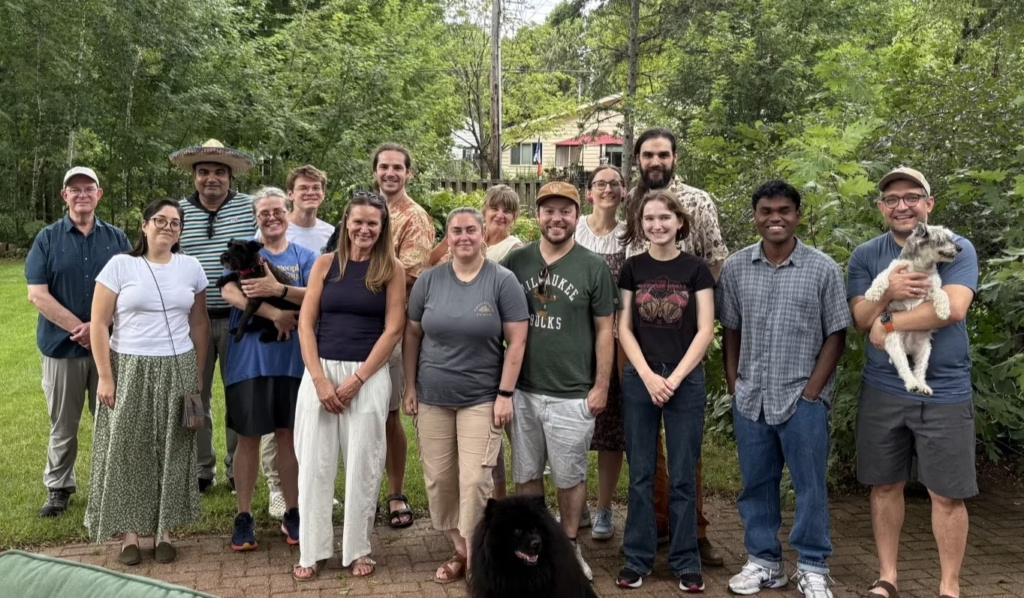
Ivan Rosado-Mendez (far right) pictured with members from the Quantitative Ultrasound Lab during their summer lab grill.
One of the most significant changes has been the use of individual development plans with the graduate students in his lab. Inspired by the career-planning discussions he participated in through STRIDE, Rosado-Mendez now meets regularly with students, usually over coffee, to review their goals and progress.
The setting is intentional. By stepping away from the lab, the conversations become less hierarchical and more collaborative.
“My students have responded well to this approach,” he said. “It gives us an opportunity to reflect on students’ goals and adjust our plans when those goals evolve.”
Developing as a leader
Even after completing STRIDE, Rosado-Mendez continued his development through STRIDE 2.0, an advanced program that provides alumni with ongoing professional development and career coaching. It includes many of the same components of STRIDE 1.0, such as a cohort-based learning experience, seminars, and one-on-one mentoring, but it also provides funds to cover private and tailored coaching sessions.
Just prior to his participation in STRIDE 2.0, he assumed a leadership role as vice chair for social impact and belonging within his department. He used the program to focus on developing leadership skills and becoming more strategic in that role.
Conversations with mentors, combined with additional professional development opportunities and resources, helped him build new tools for fostering a fair and non-restrictive academic environment.
“STRIDE provided me with the tools I needed to become a more informed and strategic leader,” he said. “What I learned continues to shape how I approach leadership and contribute in meaningful ways within my academic community.”
A long-term investment
For Rosado-Mendez, programs like STRIDE send an important message about institutional commitment. These programs provide a sense of stability, and they show that the university is willing to invest in early-career faculty members’ long-term development and success.
Perhaps most importantly, he believes the relationships formed through STRIDE will continue long after participation formally ends.
“You never stop being a STRIDE scholar,” he said. “When I face challenges, I still reach out to people from the program for advice and support.”
That enduring sense of community may be the program’s most valuable outcome—and one he hopes more scholars, especially international students and trainees, will have access to in the future.
“At the end of the day,” he said, “we’re all looking for community.”
Funding for STRIDE was provided by the UW School of Medicine and Public Health (SMPH) from the Wisconsin Partnership Program through a strategic grant administered by the SMPH Office of Basic Research, Biotechnology and Graduate Studies.